
 Share
Share 



West Virginia remains part of a small group of states with regulated real-money online casino gaming, according to a new industry overview that says broader expansion slowed in 2026.
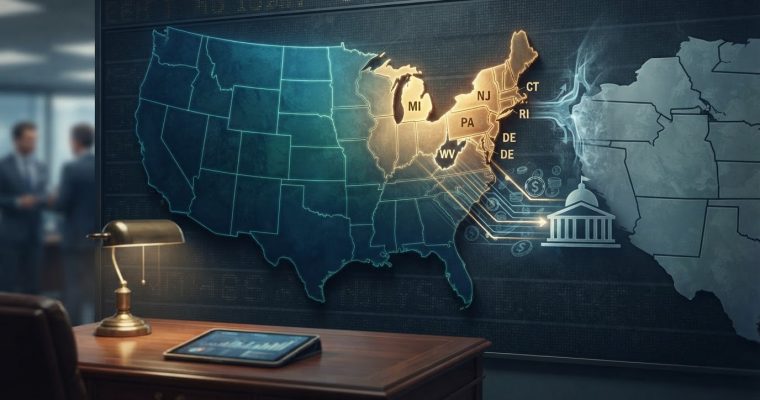
The sponsored article, published by the _Rutland Herald_, says online casino gaming is currently live in New Jersey, Pennsylvania, Michigan, West Virginia, Connecticut, Delaware, and Rhode Island. It also says West Virginia stands out for having a comparatively low 15% tax rate.
No West Virginia-specific policy change was reported. Instead, the piece places the state within a national market that appears stable in existing jurisdictions but faces resistance in states still considering legalization.
Existing iGaming states continue to hold ground
The article says established online casino states continue to perform well even as legislative momentum has cooled elsewhere. It points to New Jersey and Pennsylvania posting record monthly revenues, while Michigan has grown into one of the country’s largest online casino markets.
For West Virginia, the main takeaway is continuity rather than change. The state remains listed among the active regulated markets, alongside six others. The source also notes that nearly every state with legal gaming directs a meaningful share of revenue to public programs such as education or property tax relief, though it does not provide a West Virginia-specific breakdown.
Why new legalization efforts have slowed
According to the article, efforts to expand online casino gaming into additional states lost momentum in 2026. Bills in New York, Illinois, Maryland, and Virginia stalled.
The source attributes that slowdown to opposition from land-based casinos, unions, and local governments concerned that online gambling could divert revenue and jobs from physical casino properties. It also says a coalition of casino operators and advocacy groups has opposed new bills.
One exception highlighted in the article is Maine, which is described as potentially joining the regulated online casino list through a tribal partnership model that would give the Wabanaki Nations exclusive rights to partner with licensed platforms.
What West Virginia readers should watch
The article suggests the next phase of US iGaming growth may depend less on broad momentum and more on state-specific political models, including tribal frameworks and debates over tax structure. It also notes that states have been moving to ban or restrict sweepstakes casinos.
For West Virginia players, the immediate picture appears unchanged: the state remains in the regulated market, while the bigger shifts to watch are whether new states join the map and how policymakers around the country approach competition from unlicensed alternatives.
—
Source: As reported by Jayme Qutermous.